
Imitation or Improvisation: Rethinking Your Fly Box
Philosophical Discussion

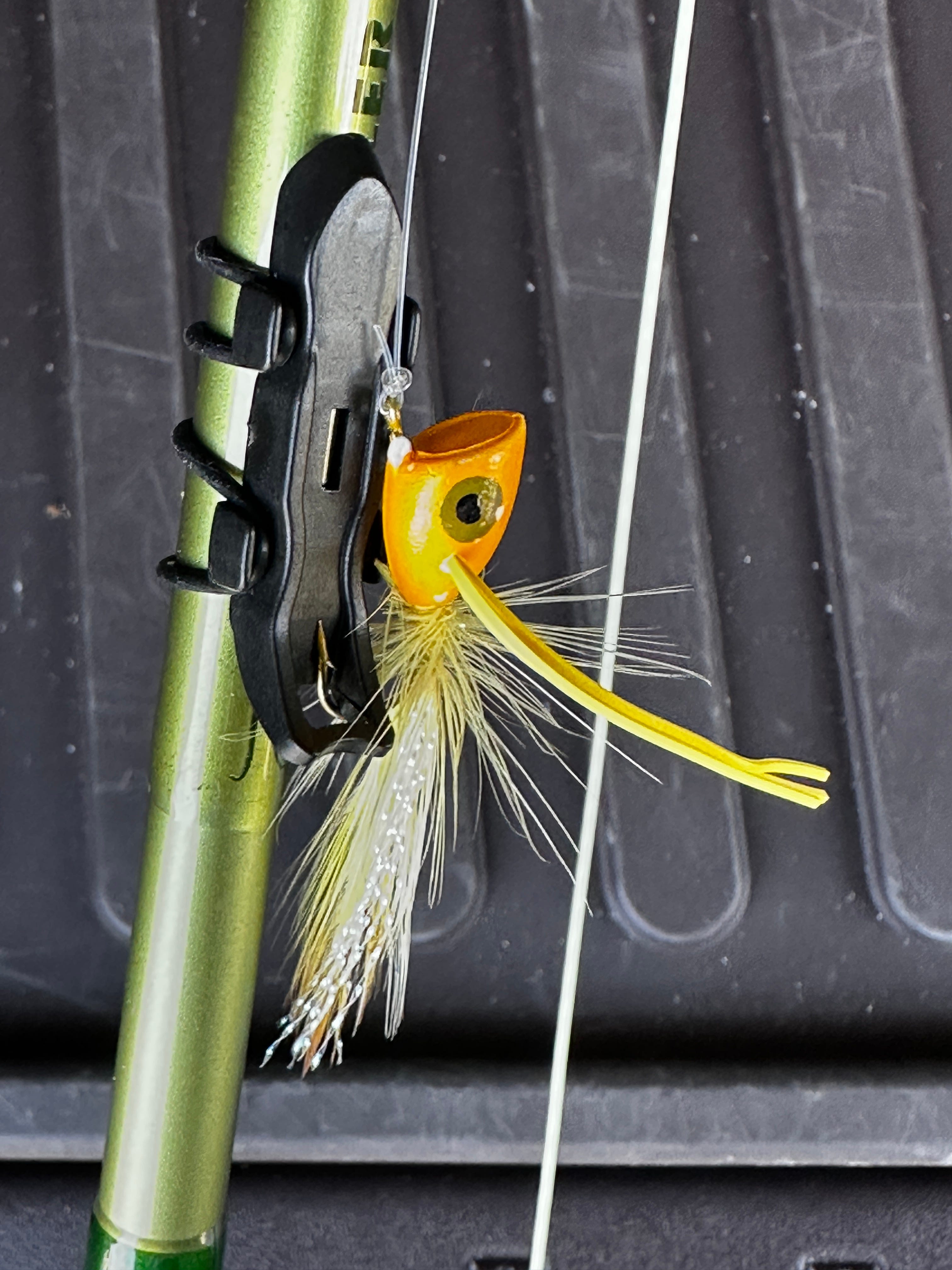
The debate in fly fishing between “Matching the Hatch” and relying on a small number of flies has been argued for ages. It pits two contrasting philosophies about how to catch fish. Each has its advocates. Fundamentally the debate centers on the balance between strategy and practicality.
During my recent trip to Wyoming to fish the North Platte River, I watched this debate unfold firsthand. I fished with four different guides, and each started with a set strategy to maximize the probability of a successful day.
My Day One Guide (JJ) and I went to the Miracle Mile, where he noticed the start of a stonefly hatch. Based on that, he decided I should use a two-fly nymph rig with a stonefly attractor on top and a pale morning dun as the bottom fly. All the fish I caught that day were on the bottom fly, not the one that “matched the hatch.”
My Day Two Guide, Ian, took us to the Gray Reef section of the river. Again, we decided to nymph fish. Ian also started us with a leech pattern on top and an annelid as the bottom fly. Neither fly was about “matching the hatch” but instead was based on Ian’s recent knowledge of what had been working over the past few days. We caught some fish in the morning, but the bite slowed down in the afternoon.
My Day Three Guide (Eric) took us to the Kortes Reservoir to fish for brown trout. We decided to stream fish since the water was deep and not moving much. Eric started my buddy John with a black colored streamer and me with a tan streamer. John started getting hits on the black, and Eric then switched out my fly to black. That change resulted in my receiving strikes as well—no attempt to mimic a unique food source, just a choice to use what worked.
My Day Four Guide (Jaylen) took us back to the Gray Reef, where we nymph fished. Jaylen rigged my partner Mark with one set of flies and me with another. We fished the two different rigs until one of us started hooking up with trout. Jaylen spent more time focusing on the depth we fished than the flies we used. Both Mark and I had a fantastic day.
My only consistent observation is that the Guides shared information at lunch about what was working, and we all gravitated toward the successful fly selection. There wasn’t a deep discussion about “Matching the Hatch”; it was all about using what was working to catch fish.
That made me start thinking about the debate between “Matching the Hatch” and relying on a small selection of flies that usually work. Do you try to mimic what the fish are eating, or do you just improvise and pick a general fly until you find one that works? I decided to research the question and see what the experts have to say.
For perspective, “Matching the Hatch” means choosing a fly that closely resembles the insects or prey fish that fish are feeding on. It requires observing the water, weather, and insect activity, then selecting the size, shape, color, and behavior of the food fish are eating. Many anglers say that in pressured water, fish become very selective and will reject any other presentation. To be successful, you need to know your bugs. The downside is you have to carry many flies in your box to cover different possibilities.
In contrast, relying on a small number of flies means selecting a small number of generalist flies that can mimic a wide range of insects or prey. The focus of this approach is on simplicity. The obvious downside is that if you pick the wrong flies, you won’t be catching fish. Here is a consensus of the experts’ advice on which generalist flies to have in your box.
For trout, the top six flies to consider are:
Parachute Adams (sizes 12-18)
Elk Hair Caddis (sizes 12-18)
Beadhead Pheasant Tail Nymph (sizes 12-18)
Woolly Bugger (sizes 6-10)
Griffith’s Gnat (sizes 14-22)
Gold Bead Hare’s Ear (sizes 8-18)
For bass, the top six they recommend are:
Clouser Minnow (sizes 2-6)
Woolly Bugger (sizes 4-8)
Popper (sizes 2-6)
Sneaky Pete (sizes 4-8)
Muddy Buddy (sizes 4-6)
Dahlberg Diver (sizes 2-6)
The other thing I discovered in my research is that “Matching the Hatch" is seen by experts as the better approach when fish are selectively feeding on a specific hatch and when the water is clear. This can be particularly true if fish are life-stage feeders. It allows you to decide whether to fish emergent or adult flies.
However, when the water is murky or fast-moving, they believe selecting a popular fly might work better. Or if you are fishing for less selective species, such as bass.
I decided to explore if there is any real data to determine which approach is more effective. The problem I found is that there are not many published studies. In the few I uncovered, it was suggested, the “Matching the Hatch” strategy generally caught more fish. Success rates were reported to exceed 70% in ideal conditions. Catch rates for the general fly strategy were reported to be around 50-60%. One Provo River study I found examined catch charts from 73 fishing trips and concluded that matching specific hatches outperformed general patterns when timed correctly.
After researching both sides of the debate, I remain undecided. The cost and complexity of “Matching the Hatch" can be a significant downside, in my opinion. I’m not a big fan of bugs, so learning a lot about them doesn’t appeal to me. But, if fish are rising to feed, I can totally understand the potential effectiveness of “Matching the Hatch.” On the other hand, I love the simplicity of carrying six flies in my box and rotating through them until I find something that works. This strategy allows me to focus more on the simple pleasure of fly fishing. Ultimately, I believe that is the most essential part. I don't fish to catch; I fish to immerse myself in nature and calm my soul. For me I think I prefer improvisation over imitation.
Which side of the debate do you land on?